Donation guide
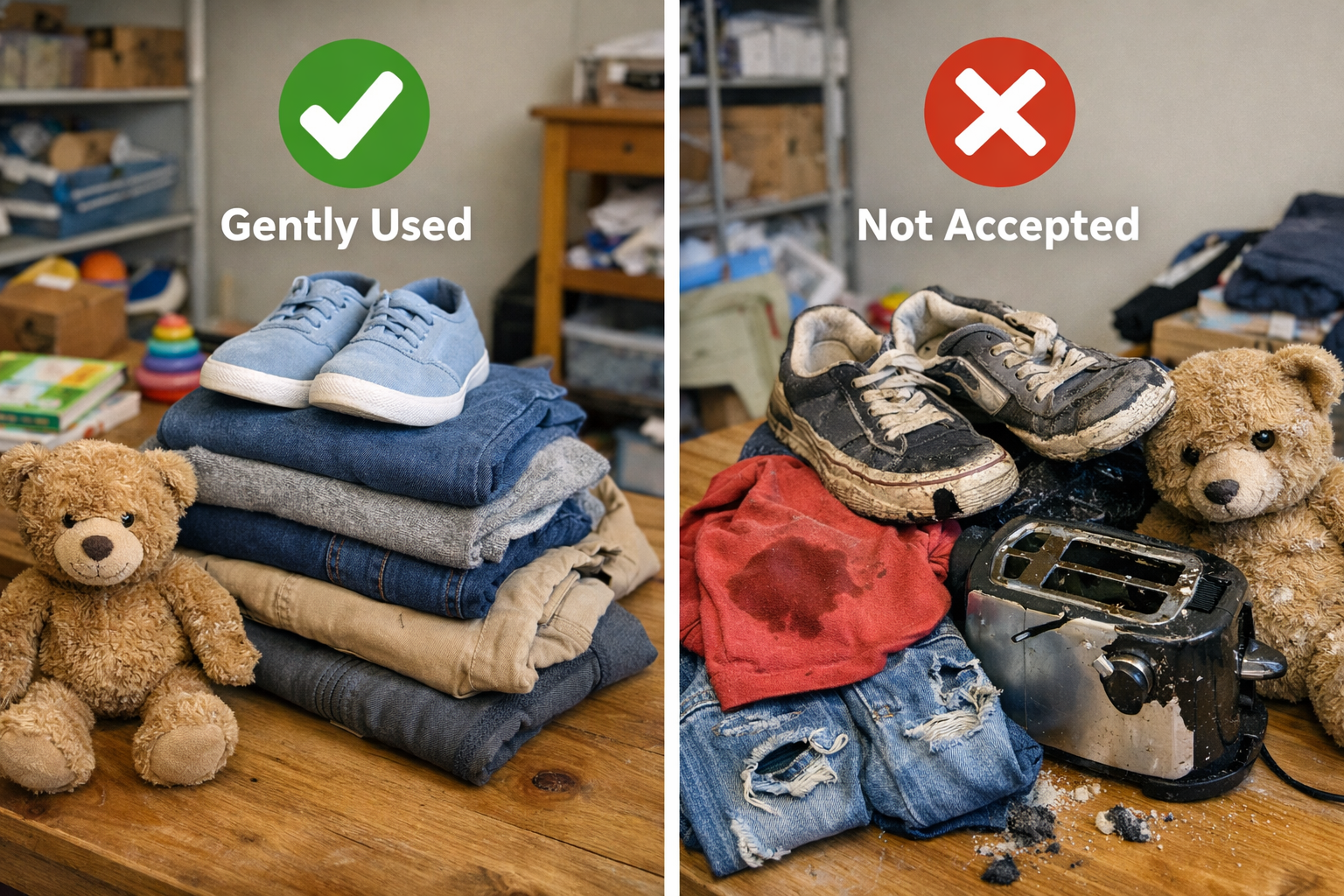
Donation Sorter is designed to connect useful, gently used items with organizations that can deliver them directly to people in need.
This guide helps make sure donations are functional, respectful, and truly helpful.
What 0rganizations are Not Looking For
When you find the right organization, please do not donate items that are:
Ripped, torn, or heavily worn
Stained, moldy, or visibly dirty
Broken, missing parts, or nonfunctional
Past the point of repair
If you wouldn’t feel comfortable giving it to a friend or family member, it’s probably not the right fit here.
Commonly needed items
Many Bay Area groups consistently seek everyday essentials that support housing stability, youth programs, and family transitions.
Adult clothing
Adult clothing is one of the most consistently needed categories across the Bay Area, with men’s clothing in especially high demand. When organizations request adult clothing, they are typically looking for everyday, functional items—jackets, hoodies, pants, and work-appropriate shoes—that can be worn immediately and with dignity.
Bedding
Bedding is a critical need for shelters and short-term housing programs. When an organization asks for twin sheet sets, they usually mean a complete, clean set (fitted sheet and flat sheet, with a pillowcase if available), as twin beds are the standard size in most shelter and congregate living settings. Bundling the set together in a large zip-top bag and labeling the contents on the outside can make distribution easier and faster for staff.
Kitchenware and flatware sets
Kitchenware and flatware are essential for individuals and families moving into transitional or permanent housing. Organizations generally need practical, functional items—plates, bowls, utensils, pots, and pans—that help someone fully set up a home, rather than single mismatched pieces.
Backpacks and bags
Backpacks and durable bags are widely needed by youth-serving organizations, outreach programs, and shelters to help people safely carry personal belongings and essentials. In addition, many food pantries can accept clean paper or plastic grocery bags to help distribute food to clients.
Surprisingly common requests
Organizations are often looking for very ordinary, easy-to-overlook items—things people frequently have sitting in closets, garages, or offices and aren’t sure how to donate. Common examples include clean towels, laundry baskets, hangers, desk and office supplies like binders and folders, small side tables, nightstands, lamps, mirrors, and basic shelving.
Working electronics also fall into this category. Items like computer monitors, keyboards, printers, and extension cords are sometimes accepted by organizations that support job readiness, students, or people transitioning into housing, and can be far more useful than people realize when they’re still functional.
Do you have items that are broken or beyond repair?
If something isn’t functional or usable, the first step—when possible—is to see if it can be repaired, fixed, or repurposed. But when repair isn’t realistic, there are other responsible streams for disposal that keep materials out of landfills as much as possible.
-
Stores like Best Buy and Staples accept many types of electronics for recycling, including monitors, keyboards, printers, and cables, helping ensure hazardous materials are handled properly.
-
Clothing that is ripped, stained, or beyond wear still has recycling options. Programs like Trashie or H&M and Madewell’s denim recycling initiative allow textiles to be diverted from landfills and reused or broken down into new materials.
-
Organizations like Habitat for Humanity ReStore locations in the Bay Area may accept furniture that needs light repair or is partially damaged, but they generally do not accept items that are structurally broken—always check their guidelines before drop-off.
For furniture that is truly broken or beyond reuse, municipal services are often the best route. In San Francisco, Recology offers bulky-item pickup for residents, which can include broken furniture and helps divert materials from landfills when possible. Other Bay Area cities offer similar bulky-item or large-item disposal services through local waste providers.
Some reuse and salvage organizations, such as Urban Ore, may accept certain furniture pieces or components—especially wood or metal items—even if they’re imperfect, as long as they can be salvaged or repurposed.
When furniture can’t be donated, reused, or salvaged, using these local disposal and recycling streams is the most responsible next step.